
Choosing Your Care Setting
Families in Wiesbaden can choose from several birth settings.
Families may choose to give birth in a German hospital, freestanding birth center, or at home. Each offers a different balance of medical support, environment, and approach to care.
Hospital Birth
What May Feel Different in German Hospitals
Hospital birth in Germany may feel different from the U.S. model of care. Practices vary by hospital, but many families notice differences in how labor is supported, how pain management is approached, and how postpartum care is structured. This reflects a midwife-led model of care, with physicians available for medical support when needed.
In German hospitals, midwives (Hebammen) are the primary providers during labor and birth and are trained to manage low-risk birth independently. Physicians are available within the hospital and become directly involved if medical intervention is needed. Unlike the U.S. model, there is no direct equivalent to labor and delivery nurses as primary birth attendants.
St. Josefs-Hospital Wiesbaden (JoHo)
Asklepios Paulinen Klinik Wiesbaden
Helios Dr Horst Schmidt Kliniken Wiesbaden (HSK)
Universitätsmedizin Mainz (Uni Mainz)
Physician-Led OB/GYN Prenatal Care
For families enrolled in TRICARE Prime Overseas, prenatal care is typically coordinated through the Wiesbaden Army Health Clinic. After pregnancy is confirmed, patients are referred to an approved OB/GYN provider, usually within the local network. Referrals are required for speciallity care, and provider options are determined by the TRICARE network and availability.
Choosing office-based prenatal care with an OB/GYN (Frauenarzt/Frauenärztin) is a common option, particularly for families enrolled in TRICARE Prime Overseas. Care is provided in an out-patient practice setting and typically includes:
routine exams and monitoring
scheduled ultrasounds (often more frequent than in the U.S.)
lab work and screening tests
a structured visit schedule throughout pregnancy
OB/GYNS may coordinate care with a midwife (Hebamme), particularly for postpartum support
recommended for higher-risk pregnancies
Labor & Pain Management
Epidurals and other pain relief are available
Overall use of epidurals is lower than in the U.S.
Greater emphasis on non-medicated support, including:
movement & position changes
birth balls and mats
hydrotherapy (laboring in water)
upright supports (e.g. wall bars)
Approach to Labor
Nurse Midwives (Hebammen) often provide the majority of hands-on labor and birth support
Movement & position changes are encouraged
In low-risk pregnancies, there may be be less routine intervention
A doctor may be called in for complications, instrumental delivery (vacuum/forceps), or cesarean section
Birth Environment
Labor rooms may feel more flexible and less procedure-driven
Equipment that supports physiological birth is commonly available
Some hospitals offer water birth options
Support People
Typically one primary support person is present during labor and birth
Specific policies vary by hospital
Postpartum Rooms
Hospital stays are generally longer than in the U.S.
Stays are approximately 2-3 days after vaginal birth
Longer after a cesarean birth
Postpartum Stay & Care
Emphasis on recovery, rest, and maternal well-being
Support with feeding and newborn care is provided during the hospital stay
Follow-up care often continues at home through midwifery visits
Freestanding Birth Center
Geburtshaus Idstein
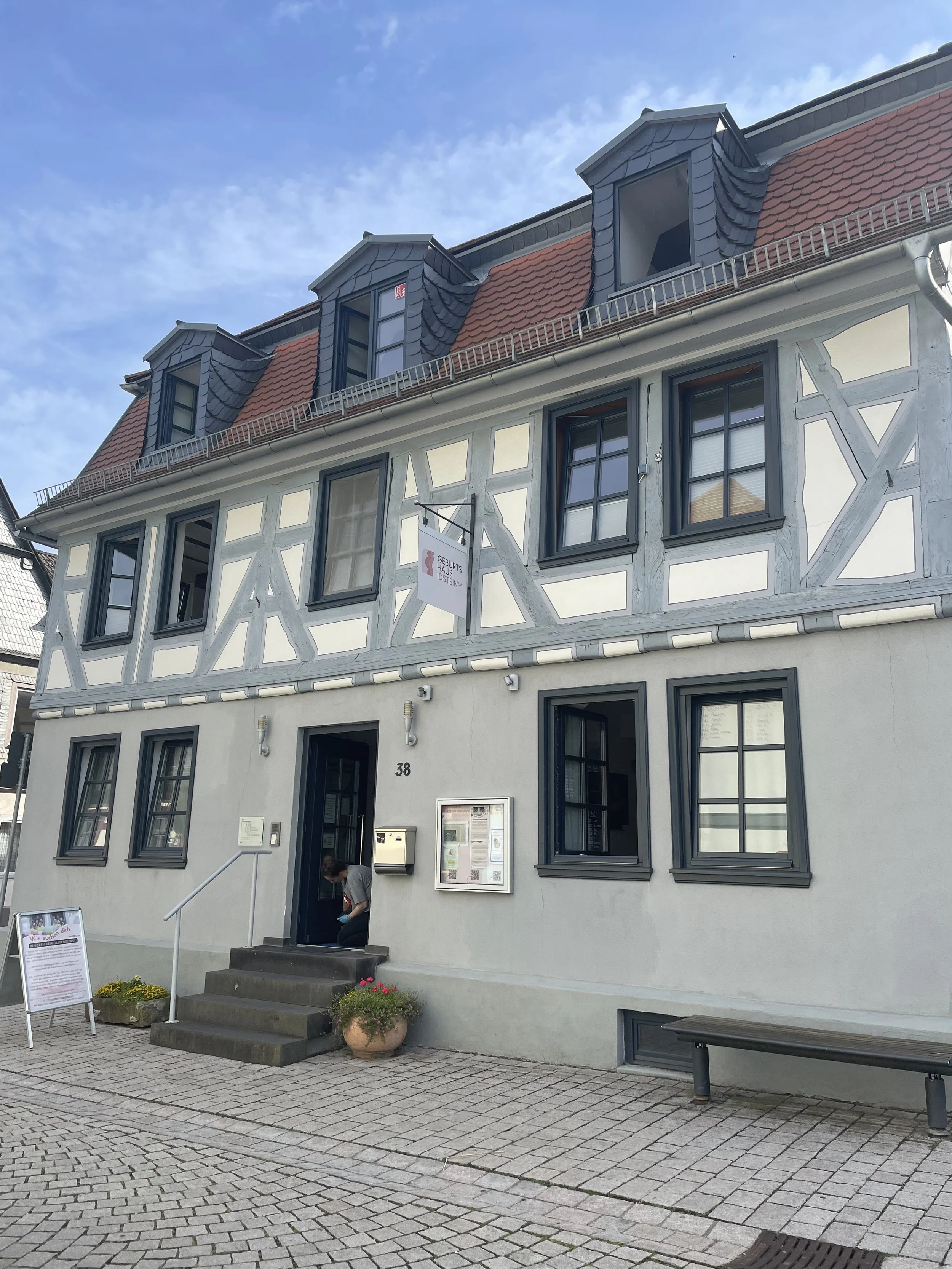
The birth house offers midwife-led care in a non-hospital setting designed to support physiological, low-intervention birth.
The environment is calm and home-like, with a focus on mobility, comfort, and continuous support.
A Midwifery-Led Model of Care
At the Geburtshaus Idstein, care is entirely led by midwives across pregnancy, birth, and the postpartum period.
This means:
You are cared for by midwives — not rotating hospital staff
You often meet your birth team before labor begins
Care is continuous and relationship-based
During labor, care is typically 1:1 (or even 2:1) support, which is a defining feature of birth center care.
This is very different from most hospital settings, where care is shared across multiple providers and shifts.
Prenatal Care More Time, More Continuity
At a birth center like Idstein:
Prenatal visits are often longer and more personalized
You may receive care such as:
body-based therapies
childbirth education, yoga, and preparation courses
The focus is not only on medical monitoring, but on preparing your body and mind for birth.
In contrast:
Hospital-based care tends to be more time-limited and medically structured
Home birth care is also midwife-led, but entirely based in your home rather than a dedicated care space
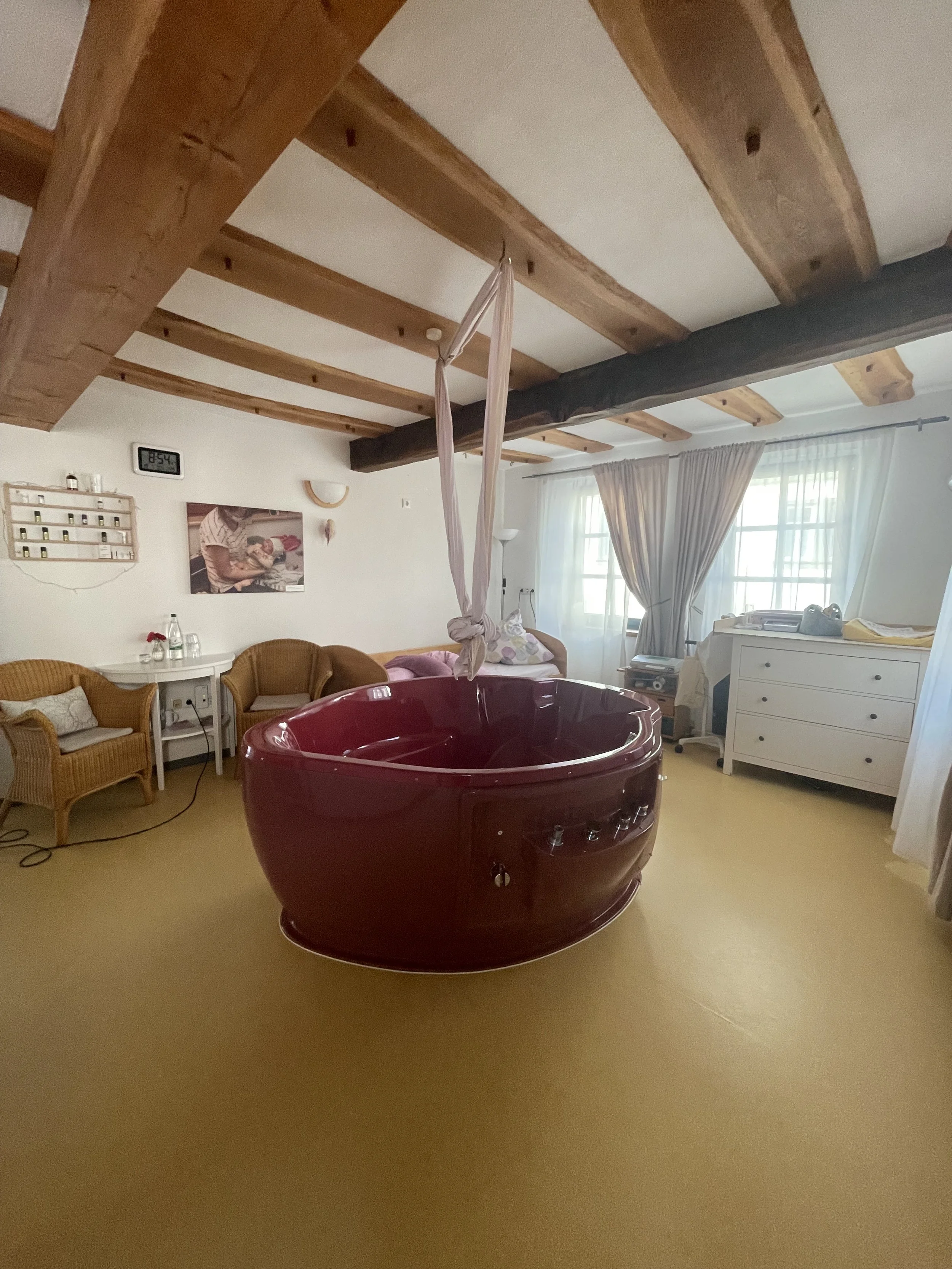
Labor & Pain Management
At the Geburtshaus:
No epidural or surgical interventions are available
Pain management is physiologic and supportive, including:
water immersion (water birth is often available)
movement and positioning
breathwork and continuous support
Birth centers generally use fewer medical pain interventions and rely on alternative methods to support labor.
The Birth Experience
The Geburtshaus is designed to feel:
calm
private
familiar
There are no routine interventions, and the goal is a self-directed, physiologic birth without unnecessary interference.
You also have:
freedom of movement
choice in positioning
a consistent care team
Safety and Transfer
Birth centers in Germany are designed for low-risk pregnancies.
If complications arise:
you are transferred to a nearby hospital
often with coordination from your midwife
Postpartum Care (Wochenbett)
This is where the German model becomes most distinct.
At Geburtshaus Idstein:
postpartum care continues in the home (Wochenbett care)
midwives provide:
physical recovery assessment
newborn checks
feeding support
ongoing guidance in the early weeks
Postpartum care is considered an essential part of the care continuum — not a single follow-up visit.
Home Birth
Hausgeburt
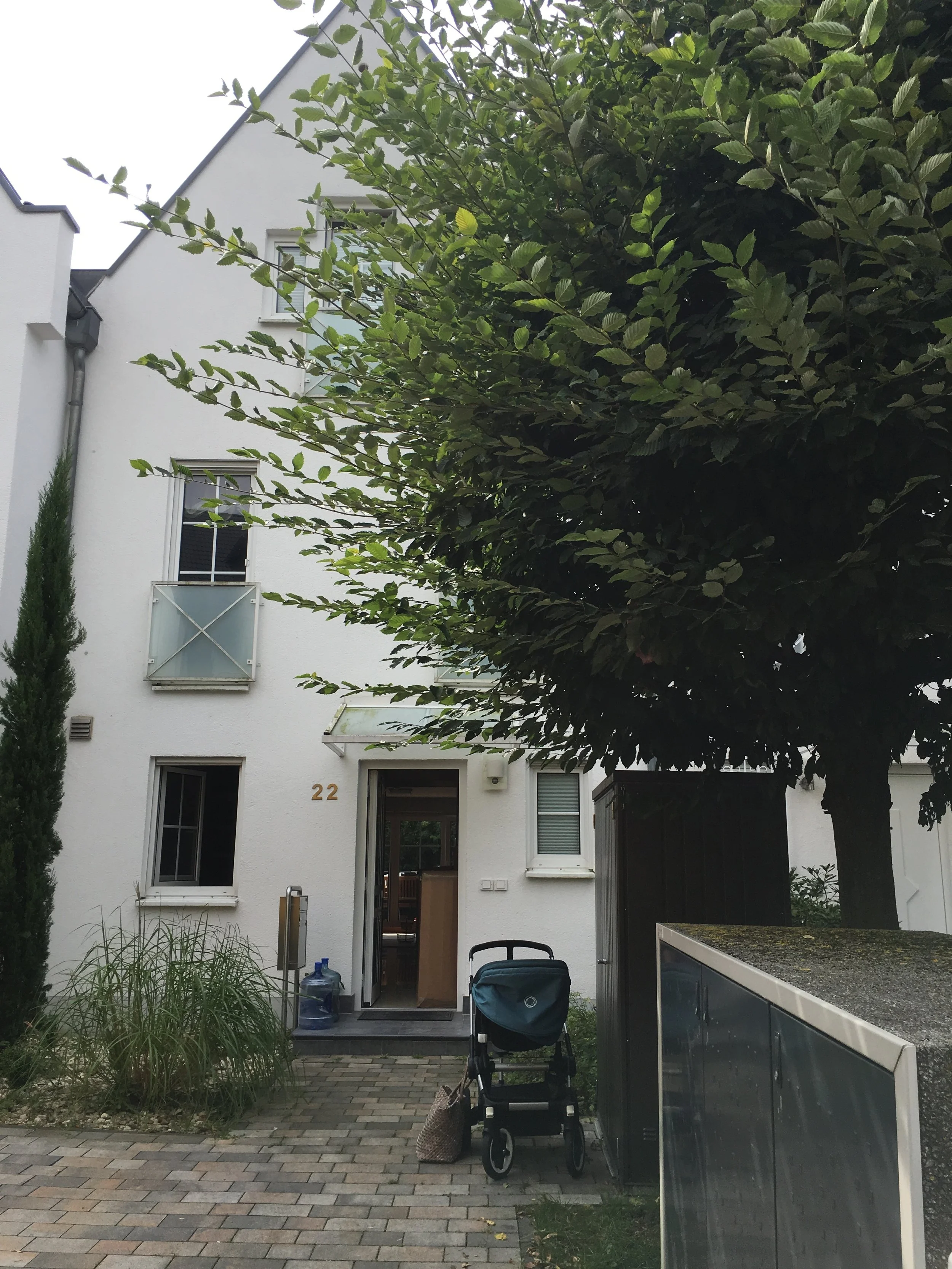
Home birth in Germany is a midwife-led option for low-risk pregnancies.
Care is provided by a licensed midwife (Hebamme) in the home, with a strong emphasis on contituity of care, physiological birth, and structured postpartum follow-up.
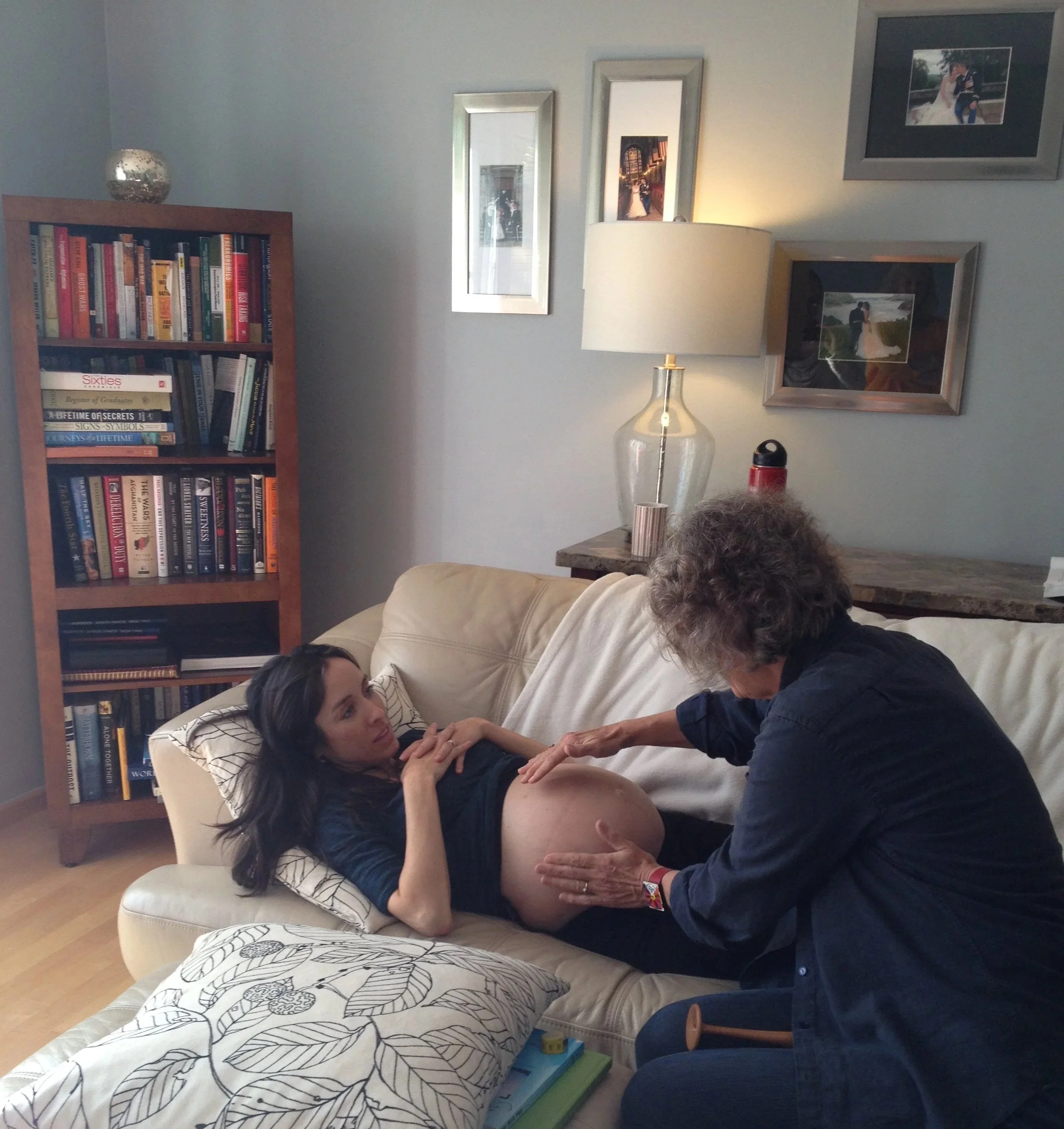
Continuity of Care Prenatal, Birth & Postpartum
German midwives often provide care across all stages.
Prenatal Care
routine assessments, labs, testing, and screening in home
coordination of ultrasound with physicians
education and preparation for birth
assessment of eligibility for home birth setting
Birth at Home
continuous labor support by a midwife
monitoring maternal and fetal well-being
use of non-medication pain management approaches
equipment brought into the home
Home birth appropriate for low-risk pregnancies, with a plan for hospital transfer if needed.
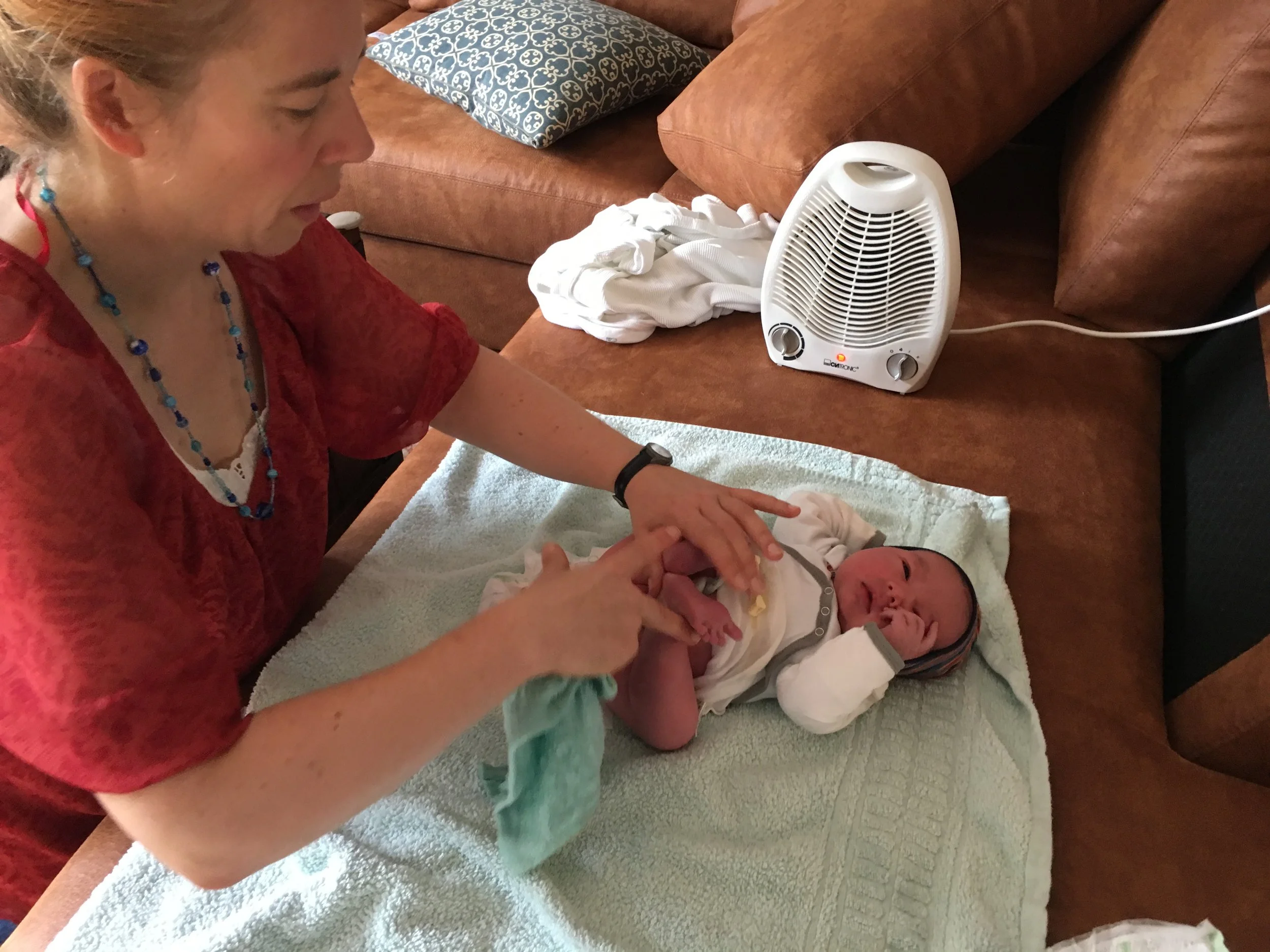
Postpartum Care
Postpartum support is a central component of the German model and typically includes home visits:
maternal recovery assessment
newborn assessment
breast or bottle-feeding support
guidance on infant sleep, soothing & care
pelvic floor exercises & postpartum nutrition education
emotional support during the transition
Finding a Midwife Hebamme
City and Regional Hebammen Listings
Many regions in Germany maintain local midwife directories (Hebammenliste), where you can:
search by location
see availability
view specialities & languages spoken
contact midwives directly
These lists are often in German, but they provide the most comprehensive view of who is practicing locally.
Ammely is a user-friendly tool available in English.
It allows you to:
search for midwives by location and due date
filter for English-speaking providers
send one request to multiple midwives at once